The year has nearly passed, and of the movies I wanted to see in theatres, I've seen about half. With the Christmas movie season approaching, however, the list of films I'd like to see sooner, rather than later, has grown. While last Christmas was a bit of a deadzone, this year is shaping up to be awesome. Here's my list of films to grab in theater while I'm in Kelowna over the holidays.
Sherlock Holmes: Robert Downey Jr. and Jude Law as the world's greatest detective and the admirable Dr. Watson. The trailers display little to no adherence to Sir Arthur Conan Doyle's literary corpus: Hollywood neo-Victorian thrillride, I presume?
The Road: I read the book last Christmas, and I'll get to see the movie this Christmas. Viggo Mortensen seems a great choice for the father in this utterly bleak dystopic tale of a future where family is not only all that matters, but all one has left. For all who feel overwhelmed by the sentimentality of North American Christmas, this one's for you.
The Imaginarium of Doctor Parnassus: I liked the last Terry Gilliam movie Heath Ledger was in, despite all the bad reviews it got, so I can't really see the downside of this phantasmagoric eye-candy, combined with performances by several of my favorite actors. It seems a more appropriate swan-song for the late Ledger to be remembered by than the admirably played but ultimately dark Joker in Dark Knight.
Christmas Carol: This one is going to take a lot of hits from the critics, but I loved Polar Express and Beowulf, so I'm not turned off to Zemeckis' CGI approach to his last few films. I've also heard rumor that the dialogue is very true to Dickens, as is the film's grim tone. Jim Carey has transcended makeup and masks before; I'm looking forward to watching his performance shine through motion-capture too.
Avatar: While I haven't yet forgiven James Cameron for fighting The Last Airbender for the title of this film, the trailers look amazing enough to cover over all wrongs. Plus, it's the first film one of the most brilliant talents in Hollywood has made that didn't involve shooting marine documentaries, so I'm not complaining. It's probably the one I'm most excited about. I don't think James Cameron has made a movie since Pirahna 2: The Spawning I wasn't blown away by.
Twilight Saga: New Moon: I'm man enough to admit when I'm wrong, and I just can't get enough of Stephanie Myer's supernatural hotties and their post-adolescent adventures...
Yeah, right. Hopefully all the Twilight-teens will keep the other theaters clear to see the movies I want to see.

Showing posts with label Movies. Show all posts
Showing posts with label Movies. Show all posts
Monday, November 09, 2009

Saturday, September 05, 2009
Inglourious Basterds
 I'm done with rating movies. After a year-and-a-half teaching college literature, I can no longer assess a movie as five stars, or 10/10, or an A+ without giving people the impression I liked or recommend the movie. Likewise, I love some movies that are simply garbage from the perspective of whether or not they're quality. I can assess critical aspects of a film without enjoying it at all, or opine reflectively from a highly objective standpoint, so perhaps I'll just do all these things, and leave ratings for the professional movie critics. Quentin Tarantino's Inglourious Basterds is a perfect example of what I'm talking about, and so it serves as a great way to announce I'll no longer be rating films, as well as kick-start my posting at Gotthammer again.
I think Tarantino is very clever, but I have mixed feelings about his style. I like elements, but never the whole product. I love the dialogue, the rejection of standard narrative devices, his quirky casting, and the dense visual pop-culture intertextuality. And yet, despite these parts, the sum has never been a film I would add to my DVD collection. Inglourious Basterds might prove the exception. I say might, because I still haven't decided if I liked it or not, in that subjective way we say we like films when someone asks us what our top ten all time films are.
The fact that I felt compelled to blog about it is surely indicative of Tarantino's ability to, if nothing else, prompt a response. You can't see a Tarantino film and utter a lackluster "feh." You either love it or hate it, in whole or in part.
I loved the performances. I loved the scene in the basement. I loved Shoshanna's story in its entirety. I was impressed by this film on every technical level. And yet, I would be hesitant to say I loved the film. And yet, I don't want to say I disliked Basterds, because I'm nearly 99% sure the reasons I do are part of the subtext of the film. I was disturbed by the violence--I'm inclined to agree with critic Daniel Mendelsohn's assessment that "In Inglourious Basterds, Tarantino indulges this taste for vengeful violence by—well, by turning Jews into Nazis." I would also agree with Tim Brayton, in that "whether Tarantino is a genius or a fool, he does nothing by accident," so I'm not convinced that this reversal is as meaningless as others might. I interpret the violence and reversal as Tony Macklin does: "Inglourious Basterds is a movie that revises history -- it's the Jews who do the marking, it's the Jews who are ruthless, and it's the German high command that is immolated." Nevertheless, with Hostel director Eli Roth on board I can't help but wonder, given Tarantino's filmography, if the gratuitous violence, motivated as it is by revenge, isn't simply gratuitous. I'm undecided. Like Macklin, I agree that one should "try to understand a film as it's meant to be understood. Once you get it, you can apply personal standards and also judge it on its own terms." I'm just not sure what the terms are.
I like the historical revision. After all, I'm writing my PhD on a narrow stripe of counterfactual narrative. I like Basterds from the perspective of alternate history. I like it as a spy movie, or an homage to spaghetti western revenge films. Sadly, I doubt very many viewers will grasp the film as its meant to be understood, or at the very least, as how I'm understanding it. Few are going to ponder how the ending might be a darkly ironic reversal of Auschwitz's gas chambers. Most are just going to talk about Eli Roth as Donny Donowitz, caving in the Nazi prisoner's head with a baseball bat in an over-the-top performance that left a bad taste in my mouth. Stephen Witty mirrors my thoughts on this aspect of the film:
It's these fine sequences that can make you truly regret Tarantino's snarky, in-joke impulses, not to mention his arrogant -- perhaps even dangerous -- lack of concern with the story's moral dimensions. Yes, it's only an action film, and these villains are "only" German soldiers, but the glee with which they're tortured dehumanizes Tarantino's heroes, and possibly us. It's no mistake that horror director Eli Roth is here, in a small role; his scenes play like outtakes from "Hostel."In a year where movie audiences were forced to think very seriously about the complexity of Nazi allegiances in The Reader, I'm worried Basterds is a regression. I wish I could be certain Tarantino meant for us to see ourselves mirrored in the Nazi audience cheering at the graphic deaths onscreen, or for me to be horrified by Donowitz. I was pretty sure that was the point given the last view we have of him manically firing a submachine gun, but the final moments of the film left me wondering. And that's where I still am. Impressed as hell, but still wondering. I think ultimately, I'd agree with Josh Larsen, who said that "Quentin Tarantino has finally made a movie that means something, though I think that’s happened entirely by accident."
Friday, May 22, 2009
Musings on the Terminator and the Matrix
While perusing the reviews for Terminator: Salvation on Rotten Tomatoes, which concur in the assessment that the newest installment in the Terminator franchise is high tech, low heart, I had the thought that the war against the machines was already filmed. It's likely been said elsewhere, but the Matrix Trilogy is certainly the spiritual, if not literal sequel to the storyline the Terminator films set up. There are brilliant cinematic nods to Cameron's films, such as Neo and Trinity's arrival at the skyscraper to free Morpheus. The industrial percussion of the musical score is nearly identical to the music of the Terminator films, and the entry and subsequent slaughter of security guards and policemen mirror each other. The relentless nature of Agent Smith is certainly a nod to the various Terminators.
On a somewhat deeper note, the rise of the machines would certainly have given way to the world the freedom fighters of Zion exist in, or under. Perhaps they exist on a separate time line where John Connor didn't pull things off. At any rate, the last battle of humans against the machines in Matrix Revolutions certainly ends in a way consistent with the progression of Arnold's Terminator from assassin to protector. The final sacrificial moments of Terminator 2 are inverted by Neo, as he makes a sacrificial act to create peace between the machines and the humans, fully realizing the relationship begun by Sarah Connor and the T-100.
While I haven't seen the film yet, my guess is that this is potentially what the new film is missing. Some sense of the transcendent, which is necessary to breathe life into films or stories filled with automatons, be they medieval golems, animated corpses ala Frankenstein (which this new Terminator film apparently shares kinship with), droids, robots, or Terminators. I'll be curious to see if, contrary to the reviewers' opinions, there is indeed a ghost in McG's new machine.
On a somewhat deeper note, the rise of the machines would certainly have given way to the world the freedom fighters of Zion exist in, or under. Perhaps they exist on a separate time line where John Connor didn't pull things off. At any rate, the last battle of humans against the machines in Matrix Revolutions certainly ends in a way consistent with the progression of Arnold's Terminator from assassin to protector. The final sacrificial moments of Terminator 2 are inverted by Neo, as he makes a sacrificial act to create peace between the machines and the humans, fully realizing the relationship begun by Sarah Connor and the T-100.
While I haven't seen the film yet, my guess is that this is potentially what the new film is missing. Some sense of the transcendent, which is necessary to breathe life into films or stories filled with automatons, be they medieval golems, animated corpses ala Frankenstein (which this new Terminator film apparently shares kinship with), droids, robots, or Terminators. I'll be curious to see if, contrary to the reviewers' opinions, there is indeed a ghost in McG's new machine.
Monday, January 12, 2009
Movies to see in 2009
In theaters:
The Watchmen
9
Star Trek
2012
El Camino
Harry Potter and the Half-Blood Prince
Coraline
Fanboys
Terminator: Salvation
To wait for DVD
Inkheart
Transformers 2
X-Men Origins: Wolverine
Leftovers from 2008 yet to see...
Australia
Quantum of Solace
Burn After Reading
Valkyrie
Madagascar 2
Tale of Despereaux
The Watchmen
9
Star Trek
2012
El Camino
Harry Potter and the Half-Blood Prince
Coraline
Fanboys
Terminator: Salvation
To wait for DVD
Inkheart
Transformers 2
X-Men Origins: Wolverine
Leftovers from 2008 yet to see...
Australia
Quantum of Solace
Burn After Reading
Valkyrie
Madagascar 2
Tale of Despereaux
Saturday, July 19, 2008
Movie Review: The Hulk 7/10

In a year awash with superhero movies, it is likely that the second cinematic attempt at bringing Marvel Comics' Incredible Hulk to the screen will be the least well remembered, despite a pre-final-credit-roll tie-in to Robert Downey Jr.'s highly successful portrayal of Iron Man. Which is too bad, since The Incredible Hulk is a far better movie than its Ang Lee channeling Freud predecessor. While I liked Eric Bana as Bruce Banner (hell, their last names even sound the same) and I enjoy watching Jennifer Connelly in the worst of films (okay, I enjoy watching Jennifer Connelly period), 2003's Hulk was all angst and no fun. Or to put it another way, too much Ang Lee and not enough Stan Lee. As I am wont to do with comic book movies, I'll be using my comic book movie criteria, but loosely throughout instead of item by item.
Louis Leterrier's direction, coupled with Zak Penn's screenplay, and an all-star cast turning in great performances makes for a great film. But it's the way in which the film stays true to its source material which really makes The Incredible Hulk as an excellent comic book film, something the first attempt never properly achieved. And when I say source material, I mean both the comic book, as well as the popular 70's television show.
First of all, Hulk Smashes. This is key. If the Hulk doesn't smash, it's just a big green dude who is somewhat tremulous. The Hulk must smash. And in a CGI filmmaking world, the Hulk can smash like he's never smashed before. The mayhem in this film gives Godzilla a run for his money. And Hulk doesn't just smash buildings, cars, or other inanimate objects. He also smashes people. He even says "Hulk Smash!" And it works.
Second, the movie nods its head to both the comic-book and the television series on many occasions, the most successfully with Lou Ferrigno's presence, both seen and heard. Seen as a security guard who can be bribed with pizza, and also as the Hulk's voice, which works really well. There's also a moment where the haunting piano music from the television series is employed in a scene where Banner is destitute in a South American city. There are others, and the comic book references abound, which is a fanboy plus. In addition, as was evidenced in Jackson's immersive Lord of the Rings sets and prop-work, those invisible layers of mythology add to a film, even if it isn't seen onscreen.
Third, Ed Norton is great as Banner. I read a few reviews that stated his performance was flat, to which I must reply, "he's playing a guy who needs to keep his heart rate down. How else would you play such a character, but flat?" If Bana's Banner had been given similar heart-rate rules, he'd have turned into the Hulk every 20 seconds. On that note, the film follows my "superheroes don't shag everything that comes their way" rule, but for very different reasons than say, Iron Man.
Fourth, Hulk smashes. That's really all I want to see when I go to a movie about the big green superhero with anger management issues. I want to see something get smashed. And I wasn't disappointed.
Wednesday, May 14, 2008
Movie Review: Iron Man 10/10

Last year I reviewed Superman Returns without using my handy Criteria for Comic Book Movies, and ended up giving it an 8. I have regretted that review several times since then. Nothing major, but I had a clouded judgment, given that it was a Superman movie, and I am a huge Superman fan. If I'd used my Criteria for Comic Book Movies, I think Superman Returns is a 6, maybe 7 at the most.
By contrast, I am fully convinced that Iron Man is a 10. It is a perfect comic book movie. But just to make sure I'm not biased, I'll stick to the Criteria this time.
1. Source Material. Iron Man sticks to its source material as though it were scripture. The origin story in the film is same as the original comic book. The characters are pulled right from the pages of Iron Man, and the villain, Obadiah Stane and his Iron Monger suit, were the wrap up to a long-running animosity between the two. The film achieves a tight summation of the first 20 years of the Iron Man mythos without sacrificing the heart of the tale.
2. Visual Storytelling. The montage giving the audience Tony Stark's back-story was brilliant, and epitomizes what comic book film-making should be about. The story jumps time several times without losing linear continuity, effectively saying more with less. The Iron Man suit's powers are demonstrated, rather than revealed through exposition.
3. Costume. While it is definitely sleeker and sexier than the original Iron Man armor, the armor of the film is undeniably the same as the comic book's. Any improvements made are in the details, rather than the obvious choice some might have made years ago, which would have been to lose the red and gold colors in favor of something less bold and...well, comic book.
4. The fourth rule is that Superheroes don't shag everything that comes their way. I should have added the caveat, unless they're Tony Stark. However, while Tony starts out as a womanizing playboy, his serial sexual escapades are framed in a negative way. Early Tony is not presented as a moral exemplar. His experience in the Middle East is transformational beyond his becoming Iron Man. He seeks to become a better person in his private life as well. I like this, because it means that when I take my kids to films like this some day, I don't have to explain why Superman humping Lois in the fortress of solitude wasn't considered morally reprehensible (I'd like to say that I don't think this is prudery. And perhaps I need to limit my criteria to Superhero Comic Book Movies, since films like Sin City are adaptations of comic books with lots of sex in them. )
5. The fifth rule used to be "Keep Joel Shumacher away from your film." I might add Sam Raimi to that list now, given the general public's response to the third Spider-man film. I think the core idea behind this rule is that good special effects, flashy special effects and glitzy sets do not a comic book movie make. The mise-en-scene of the film should not be garish or painted entirely in oversaturated primary colors. The setting can look completely realistic, which ostensibly allows for the actions of the super-hero to be even more fantastic. Iron Man does not take place in some fictional world, but in our world, with something to say about the issues taking place in our world. While it might not actually change anything about the real world's problems, I have to say that the moment where Iron Man descends with a vengeance upon terrorists preparing to wipe out a small village has a certain cathartic joy to it you just can't get from watching Hotel Rwanda. It's part of the fantasy of the comic book, that these heroes are real in some possible world somewhere, making things right in a way our world never seems to achieve.
6. Give the fanboys and girls things only they will appreciate. Iron Man showcases one of the best Stan Lee cameos ever, when Tony Stark mistakes him for Hugh Hefner. Or perhaps he's supposed to be Hugh Hefner. As a fanboy, I know that Stan Lee was Hugh Hefner in Fantastic Four many years ago when She-Hulk was taking Ben Grimm's place for a while. A magazine of ill-repute got pictures of She-Hulk while she was sunbathing on the roof of the Baxter Building and when She-Hulk shows up at their office demanding the pictures, the sleazy mogul behind the magazine was modeled on none other than Marvel Comic's mogul himself, Stan Lee.
7. Make sure you've got good villains. Jeff Bridges was positively menacing, and when Iron Man and Iron Monger go at it, the slug-fest is worthy of the best splash pages of any comic book. There's nothing like using a motor cycle as a weapon after you've clotheslined its rider.
Beyond my formalist, anal-retentive comic book criteria, Iron Man is what summer blockbusters are meant to be, with Robert Downey Jr. reminding us all throughout the film why he was once nominated for an Academy Award.
The preview for Dark Knight was amazing. But all I could think when I left the theater is that Batman has some big shoes to fill this year. They look a lot like red and gold ski boots and if you're wearing repulsor gloves...and yeah. You can fly.
Monday, March 31, 2008
DVD Review: The Mist - 5/10

I'm not really sure I should be calling this a review, as it's really more of a rant. However, a "rant" for The Mist will not attract search engines, and I would like to warn as many people as I can that no matter how happy you are when you start watching it, by the time you're done, you'll wish you'd rented something really cheery, like Pink Floyd: the Wall or 8mm.
Before I move on, I have to say that I love the movie. I read the novella when I was in my teens, then again in my twenties. I have a great appreciation for the Lovecraftian monstrosities, which are realized in the film to superb effect. I like being scared. I like monster movies. And I loved The Mist. I just hated the ending.
Hated it. Loathed it. There isn't a word in English for the contempt I feel for it.
It's different from the book. But that isn't what bothers me. I can deal with adaptation. I forgave the changes made to I Am Legend because they worked for the film in a way a literal adaptation of Matheson's novel might not have. It bothers me, because it's utterly hopeless. In fact, the last chapter on the DVD before the credits is aptly named "Hopelessness." (I'd footnote this point if I could, but the blog won't let me, so I'll settle for a bracket. The hopeless ending isn't necessarily a bad thing. I've seen films where it worked. The reason it doesn't work with The Mist is that there's no way in hell the main character played by Thomas Jane would have made the choice he did. He retains hope throughout the film, even when others lose it. So for him to lose hope right before his hope would be rewarded was like a kick in the nuts. It was cheap, and unoriginal. I said it about Silent Hill, and it still holds true. There's nothing original about bleak endings anymore, especially in horror films. Wanna be really original and subversive? Find a way for a happy ending to work in a horror movie. Another recent Stephen King adaptation, 1408 did. And, interestingly, so did John Carpenter when he made The Fog). I wish I'd known how crappy I'd feel after watching it. Which is why I'm warning you all.
It made me want to walk into the Blockbuster I rented it from and say, "This DVD doesn't work for me."
Of course they'd reply, "Well, we'll rent you another copy."
"I'm pretty sure that one won't work for me either," I'd say.
"How do you know? Did it skip?"
"Actually, if it had skipped, at say, 1:46:43, that would have been awesome."
"Well, we can rent you another copy."
"Does it have a different ending?"
Now I know, someone is out there saying, "You can't give a movie a bad rating just because you didn't like the ending!" And that's where you'd be wrong.
Watching a movie where the ending is utterly hopeless is a lot like going for a fantastically sumptuous meal, where the appetizer does what it should; it's not too large a portion, and it whets your appetite for the main course. The main course comes, and it's just as good as you hoped it would be. Your mouth waters with every bite. You sit, looking at the love of your life across the table, and comment on how incredible the food is, and how glad you are to share it with each other. Finally, the waiter comes to ask if you'd like to see the dessert menu, and you decide to share a decadent creation. As you wait for the waiter to return, you stare into each other's eyes and sip wine of a excellent vintage. The waiter returns, your anticipation mounts, and then he places an empty bowl on the table.
And takes a shit in it.
It's bad enough you're closing off the night with a bowl with a fresh steaming turd in it, but now you're wondering about the soup...did the waiter piss in it? What other abominations did you ingest over the evening?
A bad ending makes the whole film shitty. It's the last taste we leave with in our mouths, or brains, or whatever. After The Mist, I needed to cleanse my palette in the worst way possible. I'm not alone in my estimation that the ending ruined the experience. Ty Burr of the Boston Globe said the following: (Spoilers Ahead!!)
"Then, as if to underscore that he's above such silly things as sci-fi and horror, Darabont throws his curveball of an ending. (OK, last chance. Exit's that way. Abandon hope all ye who enter here.) Having escaped with three others, David and little Billy drive through the mist until their car runs out of gas. Around them are the shrieks of horrible things ready to pounce and rend. The five humans have a gun with four bullets; David does what he must and exits the car alone to await his fate. Two minutes later the army shows up. Bum-mer.
I don't think you have to be a parent to hate a movie that ends with the kid getting shot in the head by his dad. As a favor. And just think: All they had to do was turn on the car radio.
Someone must think such a finale is dark and daringly tragic and uncomfortable and cool. Someone is wrong. "The Mist" doesn't provoke further thought; it provokes active annoyance at being punished in the service of a pulp morality tale with pretensions. Even Hitchcock knew that: When he blew up the little boy in the bus in 1936's "Sabotage," he ended up having to issue a public apology. And Darabont, need I say it, is no Hitchcock."
Chuck Wilson of the Village Voice had this to say: "All this would be disappointing, but not infuriating, if the film's ending weren't so unforgivably bad ... which is so distasteful and untrue to all that's come before it as to be a slap in the face to characters and audience alike. The last word in King's story was "hope," and while Darabont certainly has the right to head in the opposite direction—in our own monster-filled world, happy endings are harder than ever to buy—he does so in a manner that's both pretentious and cruel. The Mist made me want to scream, but for all the wrong reasons."Writer/Director Frank Darabont, has been responsible for adapting two of King's works into film with the greatest success accorded any filmmaker who has undertaken the task. We all loved The Shawshank Redemption Frank. You know why? You didn't change the ending. We all loved The Green Mile Frank, and you know why? You didn't CHANGE the ENDING. It's a little ironic, because you mention in the commentary at the end of the film that the composer was humble enough to "get out of the way" and allow you to use a Dead Can Dance song. He didn't think he was better than Lisa Gerrard. He knew a master musician when he heard one. Maybe you should have done the same. Stephen King isn't the bestselling writer in America because he makes stupid choices. He ended The Mist the way he did for a reason. You should have done the same.
Monday, March 10, 2008
Movie Review: Cloverfield - 8/10

I really liked this film. Not in the way I like Lord of the Rings, where I'll watch it once a year until I got to my grave, or how I like Gangs of New York because I admire the quality, or even how I like other monster movies like last year's The Host or classic Toho Godzilla movies. I like it because it succeeds in doing something no film has done since the original black and white Godzilla was released. It conveys the horror a monster of massive size would produce.
Godzilla worked as a piece of horror in Japan, not because Japanese audiences were expecting a colossal lizard to stride up out of the Pacific Ocean, but because the mayhem the monster produced was strikingly familiar. The path of destruction left by Godzilla in that first, starkly monochromatic film (in a franchise that became ridiculous to the point of self-parody) bears a strong resemblance to footage from Hiroshima after the Bomb fell.
Cloverfield achieves a similar sense of horror both out of a similar memory of destruction; New York has always been a favorite American city for filmmakers to lay waste to. The American version of Godzilla took place there, which begs the question, why does one film succeed where the other failed? Cloverfield evokes its sense of memory, not simply from locating its monster in New York, but also through the mise-en-scene of YouTube. The lack of manipulative music and slick special effects lends the film a sense of verisimilitude. If Cloverfield had been filmed with multiple cameras, greenscreen effects and a bombastic soundtrack, it would have been reduced to the same campy dreck as the American Godzilla. Despite whatever nauseating effects such a decision has on audiences, it was the right one to deliver this sort of story.
As I've openly stated before, I like movies about giant monsters. Hell, I even want to see D-Wars. But Cloverfield is something special in a genre known mainly for its special effects and creature design. The film is ultimately like a good disaster movie, in that it focuses on a small group of people trying to survive the earthquake, the sinking ship, the burning building, or in this case, the giant monster. In truth, you never get a decent look at the monster. What you get are a lot of scenes listening to the characters talk, while the sounds of battle and destruction boom ominously in the background. And while it won't keep me up tonight for fear a giant monster is going to lay waste to my city, or any one on the planet for that matter, it makes for some very tense viewing nonetheless. And to boot, it's a hell of a metaphor for the chaos life hands us and the ways in which we are wont to react to it.
Sunday, February 03, 2008
2008 Films I'm Looking Forward To
Last year I saw only a handful of films in theater, but of the 7 films I started out the year looking forward to, I've seen 6, though half of those were on DVD. Nevertheless, while being a parent keeps me from seeing films when they're released, I remain an avid movie fan. And I'm excited about some of what this year has to offer in film. Given what passes for good film according to the Academy, I apparently like slumming it, as I have seen none of the films up for the major awards, and with the exception of Sweeney Todd, am in no hurry to see any of them.
My 2008 "movies I wanna see" list:
1. The Orphanage - Guillermo Del Toro produced it, and the trailer gives me shivers. To quote Bill Cosby, "Come on, scare me to death, I'm ready..."
2. The Chronicles of Narnia: Prince Caspian - I couldn't give a rat's ass what Lewis purists said about the first film - I liked it, and I love the series of books. Go rent the BBC live-action adaptations if you want pure. You'll get an animatronic lion who isn't very animatronic in the bargain.
3. The Dark Knight - with Heath Ledger's untimely passing the trailer has taken on a more sinister note; making a psychotic villain your final legacy as an actor wouldn't be anyone's intention, but Ledger looks to have given a final brilliant performance by all appearances. If it even just matches the first film, it'll be stellar.
4. Hancock - I love Will Smith. I love superheroes. I love the idea of Will Smith as a homeless, apathetic superhero. 'Nuff said.
5. Iron Man - undoubtedly my fave trailer of the past few months. And who better to play alcoholic multi-billionaire Tony Stark than the recovering alcoholic Robert Downey Jr.? Besides, the armor is the shit, and an updated version of Sabbath's eponymous tune can't be a bad thing.
6. Cloverfield - Godzilla meets Lovecraft's monsters meets the uncanny via You-tube style mise-en-scene. I'm in.
7. The Incredible Hulk - This time I can only hope Hulk gets ANG-RY instead of Ang Lee.
8. Hellboy II: The Golden Army - Guillermo Del Toro is one of my top 5 directors of all time. I love the way he thinks, and he did an outstanding job with the first film in this franchise. The tone of the visuals echoes Pan's Labyrinth, but with the volume turned up to 11.
9. Harry Potter and the Half-Blood Prince - Do I Really Need to Say Why I'm Looking Forward to Another Harry Potter Film? And joy! It's a Christmas release!
10. James Bond 22 - Sean Who? Roger Less, not Moore! Remington Brosnan? I'm all about Daniel Craig as the most authentic Bond yet. It's not to say I don't love the rest for what they were and what they brought to the franchise, but Bond needed to get into the 21st century, and Casino Royale pulled that off in spades. Here's a raised glass (Shaken not Stirred) in the hope that Bond 22 is as superb.
11. Star Trek - I'm hoping this film adopts the reboot ethos of Battlestar Galactica, and does an amazing job of reinventing the Star Trek universe (which has been in need of an overhaul since "Deep Space Nine". If it does, maybe George Lucas would consider letting someone else do the same with Star Wars.
12. Fanboys - In lieu of a reboot of Star Wars, I'll take this comedy about some nerds who go on a road trip to steal a copy of Ep 1 for their dying friend.
13. Comanche Moon - it's a direct to video western adapting Larry McMurtry's prequel to his brilliant "Lonesome Dove". None of the other adaptations have stood up to the original television miniseries starring Robert Duvall and Tommy Lee Jones, but with Steve Zahn playing a younger Gus McCrae and Karl Urban playing Woodrow Call, this one will be worth checking out.
My 2008 "movies I wanna see" list:
1. The Orphanage - Guillermo Del Toro produced it, and the trailer gives me shivers. To quote Bill Cosby, "Come on, scare me to death, I'm ready..."
2. The Chronicles of Narnia: Prince Caspian - I couldn't give a rat's ass what Lewis purists said about the first film - I liked it, and I love the series of books. Go rent the BBC live-action adaptations if you want pure. You'll get an animatronic lion who isn't very animatronic in the bargain.
3. The Dark Knight - with Heath Ledger's untimely passing the trailer has taken on a more sinister note; making a psychotic villain your final legacy as an actor wouldn't be anyone's intention, but Ledger looks to have given a final brilliant performance by all appearances. If it even just matches the first film, it'll be stellar.
4. Hancock - I love Will Smith. I love superheroes. I love the idea of Will Smith as a homeless, apathetic superhero. 'Nuff said.
5. Iron Man - undoubtedly my fave trailer of the past few months. And who better to play alcoholic multi-billionaire Tony Stark than the recovering alcoholic Robert Downey Jr.? Besides, the armor is the shit, and an updated version of Sabbath's eponymous tune can't be a bad thing.
6. Cloverfield - Godzilla meets Lovecraft's monsters meets the uncanny via You-tube style mise-en-scene. I'm in.
7. The Incredible Hulk - This time I can only hope Hulk gets ANG-RY instead of Ang Lee.
8. Hellboy II: The Golden Army - Guillermo Del Toro is one of my top 5 directors of all time. I love the way he thinks, and he did an outstanding job with the first film in this franchise. The tone of the visuals echoes Pan's Labyrinth, but with the volume turned up to 11.
9. Harry Potter and the Half-Blood Prince - Do I Really Need to Say Why I'm Looking Forward to Another Harry Potter Film? And joy! It's a Christmas release!
10. James Bond 22 - Sean Who? Roger Less, not Moore! Remington Brosnan? I'm all about Daniel Craig as the most authentic Bond yet. It's not to say I don't love the rest for what they were and what they brought to the franchise, but Bond needed to get into the 21st century, and Casino Royale pulled that off in spades. Here's a raised glass (Shaken not Stirred) in the hope that Bond 22 is as superb.
11. Star Trek - I'm hoping this film adopts the reboot ethos of Battlestar Galactica, and does an amazing job of reinventing the Star Trek universe (which has been in need of an overhaul since "Deep Space Nine". If it does, maybe George Lucas would consider letting someone else do the same with Star Wars.
12. Fanboys - In lieu of a reboot of Star Wars, I'll take this comedy about some nerds who go on a road trip to steal a copy of Ep 1 for their dying friend.
13. Comanche Moon - it's a direct to video western adapting Larry McMurtry's prequel to his brilliant "Lonesome Dove". None of the other adaptations have stood up to the original television miniseries starring Robert Duvall and Tommy Lee Jones, but with Steve Zahn playing a younger Gus McCrae and Karl Urban playing Woodrow Call, this one will be worth checking out.
Monday, January 21, 2008
DVD Review: Stardust - 9/10

A delightfully well-made, well-cast, and well-paced fairy tale film. Comparing it to "Princess Bride" seems remiss, since I'd argue that "Princess Bride" is more romantic comedy with fairy tale elements, while "Stardust" is pure fairy tale; Gaiman obviously knows his stuff, right down to the 3 brothers who are setting out on a quest to discover who is worthy to become King (a common fairy tale trope). It fulfills all five criteria I've set out in my thesis on fairy tale film; the element of wonder is present from the outset, though that sense grows as the film progresses; it deals with sexuality and gender, from the very overt (Tristan's conception and Lamia's attempts at retaining her false beauty) to the more subtle (ideas of what it means to be human); good is pitted against evil with little ambiguity; the meritorious individual wins out in the end, and there are a number of transformations, both physical (Lamia's chariot becoming an inn) and internal (Tristan, although his transformation is made clear in external ways as well). A superb piece of work, and beyond all that, a damn good bit of fun, as demonstrated by the good time veterans Pfeiffer and De Niro seem to be having while onscreen.
Sunday, January 20, 2008
DVD Review: Harry Potter and the Order of the Phoenix - 9/10

As Harry and crew continue to grow and mature, so does the look and feel of the franchise. The most gothic in its mise-en-scene, it is also the most intense in its pacing. The script does an admirable job of truncating Rowling's epic source material, although moments with the centaurs and Hagrid's half-brother feel abrupt and ultimately a bit unnecessary. Imelda Staunton proves a more loathesome villain than Voldemort, true to her literary counterpart. A final note: people need to quit bitching about which individually pet moments or characters get left in the world of the books, or quit going to see these adaptations. Considering the script packs a book running 26 hours when read out loud into 2 hours, all Potter heads should be thankful Rowling's creations are not getting the treatment Paolini's Eragon did.
Tuesday, December 18, 2007
DVD Review: The Polar Express 9.5/10
 People watch Rankin Bass Christmas specials with jerky stop-motion animation every year, and yet somehow Polar Express has been relegated as the "bad animation" whipping boy for the 21st Century's Christmas favorites? Having read (and looked at the pictures) the children's book, I think the animation suits the mood perfectly, and several of the set pieces are hauntingly beautiful. The film is strongest when aboard its namesake, but the moments at the North Pole remain enchanting enough. If it weren't for the sudden cameo of a certain pop star, it would be a perfect Christmas movie. Tom Hanks' characterizations are fantastic, and the theme of belief and faith seasonally appropriate. Highly recommended, especially if you have children who love trains. A Christmas favorite for our family.
Friday, November 23, 2007
Beowulf: Movie Review - 9/10
 I've got a lot to say about this film, given the paper I wrote on filmic adaptations of Beowulf, but I'm behind on my thesis, so I'll let a brief review suffice for the time being. Hopefully, time will allow for writing a conclusion to that original paper in the near future, to strike while the proverbial iron is still hot.
This revisionist cinematic version of the epic poem stays surprisingly true to the heart of the heroic ethos. While many seem to have missed the subtlety of the story amidst the spectacle of 3D CGI, puerile humor and over the top gore, Gaiman and Zemeckis have raised complex issues surrounding the idea of macho heroism, deconstructing without destroying it. My guess is the story is getting lost in the midst of the spectacle, which is unfortunate; this is the best Beowulf brought to screen yet, paying tribute not only to its original source text, but to the postmodern theories regarding Grendel and Beowulf as two sides of the same coin.
Thursday, November 22, 2007
Ratatouille: DVD review - 10/10
 A gourmet blend of solid storytelling, great voice acting, and some of the best computer animated visuals I've ever seen, which is as much a culinary delight for the eyes as the entrees made by Remy the rat are for the taste buds of Paris gourmands. Another hit from Brad Bird and his crew--this is why Pixar is top of the heap in animation these days, and why Dreamworks is just...dreaming.
Wednesday, November 21, 2007
The Golden Compass: Reflections on the 'danger' of Pullman's trilogy

I received the following email from my sister asking for my 'expert opinion'.
You may already know about this, but I just learned about a kids movie coming out in December starring Nicole Kidman. I believe it's called The Golden Compass, and while it will be a watered down version, it is based on a series of children's books about killing God (it is anti-Narnia).
Please follow this link, and then pass it on. From what I understand, the hope is to get a lot of kids to see the movie - which won't seem too bad - and then get the parents to buy the books for their kids for Christmas. The quotes from the author sum it all up. I'm going to tell everyone about this movie. I hope it totally bombs because we were all paying attention!
It's a quote from the Snopes.com page on the Golden Compass, replying to the allegation that "The 2007 film Golden Compass is based on a series of books with anti-religious themes". Snopes has ascertained that this is true. Sheer genius, this post. "I hope it totally bombs because we're all paying attention." The battle cry of the sign waving Christian. And after years of creating media storms through their own self-inflicted controversy, these people still don't understand that "telling EVERYONE about ANYTHING" simply raises its profile. Ever since the release of the film version of The Last Temptation of Christ I've been aware that this sort of protest results in the very opposite of what these people are hoping to achieve.
I'll let you all know right off, that unlike the complete waste-of-time I opted not to watch in its inglorious entirety (see my Zeitgeist post), I have read all of Pullman's trilogy of which Golden Compass is the first book. In truth, I've read them twice; once by myself, and then again to my wife. I then read Golden Compass a third time in a close reading for an English course on Children's literature. That was during the height of the Evangelical Christian backlash against Harry Potter, and all I could think was, "It's a clear indication that Pullman's books don't have near the success of Rowling's, or Harry's evils would be yesterday's news." The attitude towards the Christian church is clear in these books. And its not a positive one.
That said, I don't think the books are evil. I don't think they pose a threat to my faith. Or anyone else's faith for that matter, unless their faith is the glass house type, that shatters at the first challenge given it.
My approach to ministry when I was a pastor was to encourage my students to think for themselves; most of the students at Holyrood have read the His Dark Materials series, and we had some good discussions about elements in the books over coffee.
My literary background is in Comparative Literature. One of the ways we approached texts in my coursework was to ignore who the author was, or what the author had stated was supposed to be the point of the text. For example, Tolkien said he hated allegory, but many readers find allegorical elements in his works. Or, Lewis was a Christian writer, but his books contain a good deal of pagan elements. Or, to the point at hand, Pullman is an atheist who writes about the death of God. But which God?
The God of the secondary world(s) of His Dark Materials is the God of first century gnosticism. It is a God who is no god at all, but an angel with a superiority complex who has fooled angelic hosts into thinking he's God. So we're not dealing with the God of Christianity, or Judaism or Islam. We're dealing with the God of gnosticism, a false God, whether you be a believer or not. Further, Lyra, the heroine of the series effectively defeats (with the aid of many heroic companions) this God after a death and rebirth scenario. As Gotthammer visitor 'Sapience' commented in my earlier post on Pullman, "I think Pullman actually ends up self-defeating in his polemic. Lyra ends up as a Christ figure; the conspicuous absence of the Son in novels based on Paradise Lost makes us look for Christ in her (did you notice that Jesus is only mentioned once in more than a thousand pages?). She harrows hell, her end choice is one of self-sacrificial love, etc. She's not Christ, but Pullman makes us think of Christ when we see her--and I don't think it's intentional either." There's a Christ story in the final book, albeit a generically mythic death-and-rebirth one, overlapping with Christianity where it contains shared mythic elements. So whatever Pullman says off the page about Christianity and organized religion, there are some very worthwhile themes in His Dark Materials for Christians and atheists alike to engage with. It is, as Cathy McSporran suggests in her excellent article on both Lewis' and Pullman's works, " a space 'where two worldviews collide'."
That's the strength of the books. While there is an overtly corrupt organized Church in Lyra's world, there is also a clear storyline of spiritual growth, of a redeemer figure, and of concepts of the afterlife. The book handles both sides with complex characters (although as I've noted in my paper, Pullman is sadly one-sided in his handling of the Church - those characters are all bad, whereas the rest of his cast has multi-faceted depth), and allows for an ambiguity that permits the reader to continue to choose their path. It leaves us with the option to join and help build the "Republic of Heaven". And when you read what Jesus says about his "Kingdom" of servants and love, I'd say the Kingdom and the Republic are less at odds and more in common than the Evangelical watchdogs would give credit for.
We always tell people we want them to make a choice for Christ. Choices cannot be made if the other options are suppressed. That's the sort of authoritarian religious activity Pullman is railing against. All the protesting will do is confirm his belief about Christianity.
On a final note, I'm looking forward to seeing it. And if I had kids old enough to comprehend it, I'd be taking them. All this philosophical musing aside, I'm all about armored polar bears.
Tuesday, November 20, 2007
Pooh's Heffalump Movie: DVD review 7/10
 A surprisingly good film, given that Disney's sequels tend towards the lowest common denominator to make the quickest buck. Unlike many of the Pooh spin offs, this one still resonates with A.A. Milne's sensibilities (and even a few passing dialogue references to the original stories), and Kyle Stanger is utterly charming as Lumpy the Heffalump's voice. The downside is Carly Simon's original songs, which sometimes feel out of place in the Hundred Acre Wood. Overall a great film for the young and young at heart.
Monday, November 19, 2007
Charlotte's Web: DVD Review 6.5/10
 Long time visitors to Gotthammer are going to note a shift in the number of children's movies I'll be reviewing. We hardly ever find the time to watch grown up films anymore - they aren't the sort of thing we want to expose Gunnar to just yet, and we don't stay up late enough after he goes to bed to watch anything more than an episode of whichever television series we're watching on DVD. So, there's the caveat. I hope the reviews help those of you who are also parents.
The 2006 version of Charlotte's Web is a very able live-action reworking of E.B. White's tale of the deep relationship between a pig, destined to die as Christmas ham, and the spider who saves him, ironically resulting in the very fate she hoped to save the pig from. Julia Roberts' voice is well suited to Charlotte's demeanor, and most of the star studded voice casting is excellent. Comparisons to Babe are ridiculous, considering that Wilbur has seniority as the talking pig in children's literature. Refreshingly squeaky clean amidst all the sneaky innuendo I find in too many children's movies these days. A good family film, recommended.
Monday, November 12, 2007
World Trade Center - DVD review - 8/10

A powerful film which grants the viewer a little picture of this big picture event. The poster which shows the silhouettes of two men between the Twin Towers sums up the narrative ethos. If you're expecting to see a classic disaster film, this will disappoint. Oliver Stone isn't interested in showing us grand scale mayhem; he's just telling us the story of two men who lived through a terrible ordeal, and lived to tell about it.
Some will think me tacky or misguided for posting my review of this film on Remembrance Day, but it was how I chose to observe my remembrance this year, and I think World Trade Center is an excellent example of the difference between War, which is a national policy, and the people who fight, live and die in wars, which is something entirely different, and it is the second of these two which I believe Remembrance Day is for.
Wednesday, October 31, 2007
Gotthammer's Halloween Movies
The following are the films I would choose (in no particular order) to view on a dark and blustery night, provided that my wife and son were already tucked in bed, and I was looking for something to give me chills...or pause...or make me feel that delightful horror, that beautiful terror of the sublime. Happy Halloween everyone!
The Descent - this story of a group of women who become trapped in an uncharted cave network is a masterful combination of horror and monster movie, rare for both its emotional depth, as well as for the ability to maintain tension even after the 'monster' has been revealed. One of the goriest films I've ever seen - not for the faint of heart.
The Ring - don't bother telling me about plot holes in this remake of the Japanese ghost-story Ringu is all about atmosphere; while the actual scare factor is a little low, the surreal creep-you-out factor is very high. The scene at the end where the hair comes over the lip of the well haunted me for days afterward.
Godzilla (Gojira) - most of us can't relate to how the original Japanese audiences found this black-and-white man-in-a-rubber-suit monster movie terrifying, but we've seen similar reactions to Transformers this past year with references to 9/11. Godzilla is a symbol of nuclear terror, and in this first of a franchise that ended with one of the highest cheese factors in film history, the subject matter is dealt with in a visual poetry difficult to replicate in our jaded, postmodern era. The version without Raymond Burr and with subtitles is the one I recommend.
Sleepy Hollow - I saw this movie two days after I had my world cave in on me in November of 1999. There's something utterly cathartic about the horror genre in regards to deep sorrow, grief, or loss I think. At least this was the case for me in seeing Sleepy Hollow; the monochromatic landscape scooped from Burton's Nightmare Before Christmas mirrored my personal landscape, and the buckets of blood and endless decapitations seemed a fit metaphor for how my future was looking - with its head cut off. Even aside from the temporal and emotional ties I have to this movie, it remains one of my favorites simply for its gloomily brilliant (is that an oxymoron?) mood, and because it re imagined Ichabod Crane in a role which gave greater substance to the overall film. I think I'll watch it again...tonight.

Silent Hill - This film is what you get when you stick a camera in someone's head while they're in the middle of having a nightmare. A really gorgeous nightmare. The visuals exemplify the term phantasmagoria, however dubious the narrative might be. It lives up to its source material, ostensibly one of the creepiest video games ever made, until the last 30 minutes, when it denigrates into familiar Hollywood Horror Schlock, with a style of ending that the horror genre needs to get tired of, and soon. I think the most original ending a horror movie could have at this point would be a completely happy one. Given all the maternal subtext in this picture, it wouldn't have been out of place.
The Host - A daring resurrection of the Giant Monster Movie which is more complex than meets the initial viewing. What is likely to be dismissed as simply another giant monster flick from the East is actually a complex commentary on current issues, just as the genre's seminal work, Godzilla was. Instead of atomic metaphors, the subject matter is a stew of ecological, political and familial. Broken homes, a mutated fish and fragmented rhetoric all combine to make this a film that, unlike some less informed viewers have stated, a film that ought to be taken seriously. That said, "The Host" is enjoyable for all the reasons a good giant monster movie should be. However, like the poster, which would lead one to believe the monster is a giant squid, there's much more in this film than what's on the surface. Highly recommended.
The Cell - Roger Ebert called it one of the best films of 2000, and I'm more than inclined to agree with him. I'm not generally a fan of the serial killer thriller, but the CGI crafted dreamscapes and nightmare settings most of the film takes place in captivated me. The idea of the soul being an place of architecture and structure is a powerful one, and nothing new; 14th century Carmelite nun Theresa of Avila's "Interior Castle" is devoted to it. While the graphics are extremely disturbing at times, the depth the narrative sinks to is commensurate with the heights to which it rises. A visually spectacular project tainted only by the typecasting and tabloid stardom Jennifer Lopez and Vince Vaughn have been subjected to since its release. A film well worth seeing, albeit not for the faint at heart.
The Crow - while it is neither horror nor monster movie, it is unarguably a Halloween movie, from its temporal setting of "Devil's Night" ("Halloween ain't until mañana..."), Brandon Lee's makeup transforming Eric Draven into a "mime from hell" (who also bears a striking resemblance to Cesar, the murderous somnambulist from The Cabinet of Dr. Caligari) who returns from the grave; upon being told "Don't move or you're dead" by a police officer, replies, "And I say I'm dead...and I move." A supernatural take on the avenging vigilante with some of the best action set pieces in the last twenty years.
John Carpenter's The Thing - If this list had to be in some order, I think I'd put this one at the top. The claustrophobic setting of an Antarctic research station is creepy enough, especially when you add Ennio Morricone's minimalist soundtrack. In the tradition of 10 Little Indians who-dies-next films such as Aliens, and more recently 30 Days of Night, John Carpenter's The Thing stands alone, since each death results in a perfect alien doppelganger, so that the suspense is doubled, and even at the end of the film, the question "who is really human" remains ambiguous, unanswered. A classic.
 There are a myriad number of notable films for this list; Tim Burton's Nightmare Before Christmas is an annual tradition, a pastiche of horror motifs but not horror per se, the new miniseries of Salem's Lot with Rob Lowe, the brilliant Shaun of the Dead, and one of my favorite long form creep outs of all time, the first 16 episodes of Twin Peaks. So there you have 'em. A few of my favorites, just in time for Halloween. Hope yours is a good one.
The Descent - this story of a group of women who become trapped in an uncharted cave network is a masterful combination of horror and monster movie, rare for both its emotional depth, as well as for the ability to maintain tension even after the 'monster' has been revealed. One of the goriest films I've ever seen - not for the faint of heart.

The Ring - don't bother telling me about plot holes in this remake of the Japanese ghost-story Ringu is all about atmosphere; while the actual scare factor is a little low, the surreal creep-you-out factor is very high. The scene at the end where the hair comes over the lip of the well haunted me for days afterward.
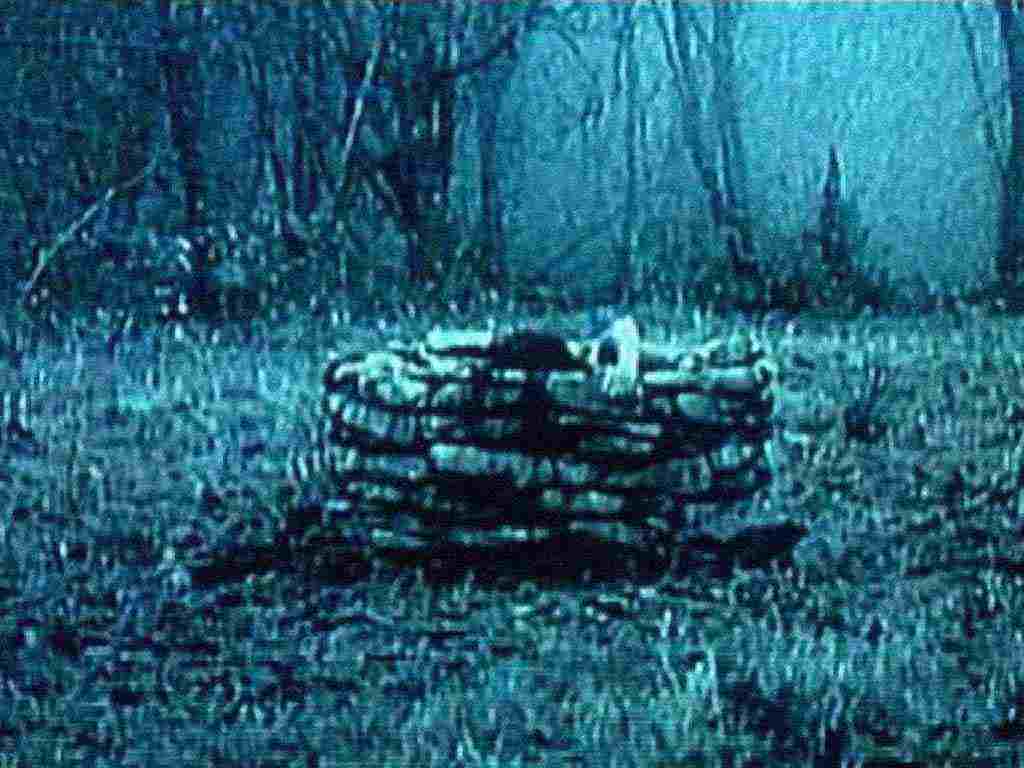
Godzilla (Gojira) - most of us can't relate to how the original Japanese audiences found this black-and-white man-in-a-rubber-suit monster movie terrifying, but we've seen similar reactions to Transformers this past year with references to 9/11. Godzilla is a symbol of nuclear terror, and in this first of a franchise that ended with one of the highest cheese factors in film history, the subject matter is dealt with in a visual poetry difficult to replicate in our jaded, postmodern era. The version without Raymond Burr and with subtitles is the one I recommend.

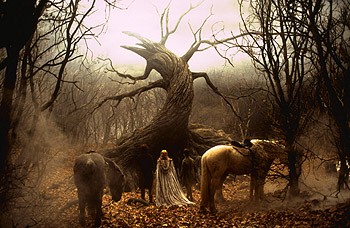
Sleepy Hollow - I saw this movie two days after I had my world cave in on me in November of 1999. There's something utterly cathartic about the horror genre in regards to deep sorrow, grief, or loss I think. At least this was the case for me in seeing Sleepy Hollow; the monochromatic landscape scooped from Burton's Nightmare Before Christmas mirrored my personal landscape, and the buckets of blood and endless decapitations seemed a fit metaphor for how my future was looking - with its head cut off. Even aside from the temporal and emotional ties I have to this movie, it remains one of my favorites simply for its gloomily brilliant (is that an oxymoron?) mood, and because it re imagined Ichabod Crane in a role which gave greater substance to the overall film. I think I'll watch it again...tonight.
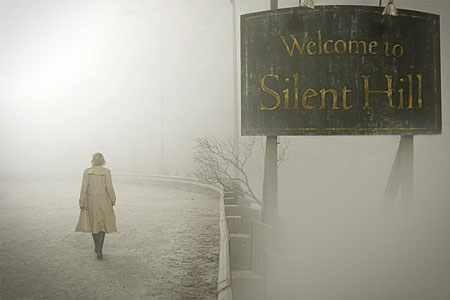
Silent Hill - This film is what you get when you stick a camera in someone's head while they're in the middle of having a nightmare. A really gorgeous nightmare. The visuals exemplify the term phantasmagoria, however dubious the narrative might be. It lives up to its source material, ostensibly one of the creepiest video games ever made, until the last 30 minutes, when it denigrates into familiar Hollywood Horror Schlock, with a style of ending that the horror genre needs to get tired of, and soon. I think the most original ending a horror movie could have at this point would be a completely happy one. Given all the maternal subtext in this picture, it wouldn't have been out of place.
The Host - A daring resurrection of the Giant Monster Movie which is more complex than meets the initial viewing. What is likely to be dismissed as simply another giant monster flick from the East is actually a complex commentary on current issues, just as the genre's seminal work, Godzilla was. Instead of atomic metaphors, the subject matter is a stew of ecological, political and familial. Broken homes, a mutated fish and fragmented rhetoric all combine to make this a film that, unlike some less informed viewers have stated, a film that ought to be taken seriously. That said, "The Host" is enjoyable for all the reasons a good giant monster movie should be. However, like the poster, which would lead one to believe the monster is a giant squid, there's much more in this film than what's on the surface. Highly recommended.

The Cell - Roger Ebert called it one of the best films of 2000, and I'm more than inclined to agree with him. I'm not generally a fan of the serial killer thriller, but the CGI crafted dreamscapes and nightmare settings most of the film takes place in captivated me. The idea of the soul being an place of architecture and structure is a powerful one, and nothing new; 14th century Carmelite nun Theresa of Avila's "Interior Castle" is devoted to it. While the graphics are extremely disturbing at times, the depth the narrative sinks to is commensurate with the heights to which it rises. A visually spectacular project tainted only by the typecasting and tabloid stardom Jennifer Lopez and Vince Vaughn have been subjected to since its release. A film well worth seeing, albeit not for the faint at heart.
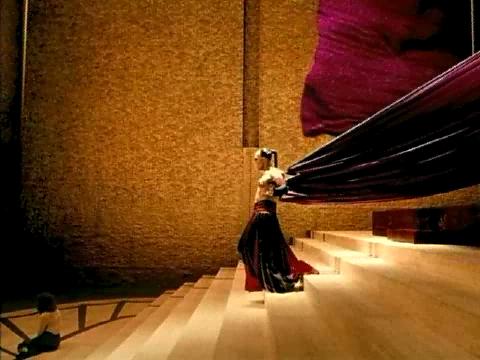
The Crow - while it is neither horror nor monster movie, it is unarguably a Halloween movie, from its temporal setting of "Devil's Night" ("Halloween ain't until mañana..."), Brandon Lee's makeup transforming Eric Draven into a "mime from hell" (who also bears a striking resemblance to Cesar, the murderous somnambulist from The Cabinet of Dr. Caligari) who returns from the grave; upon being told "Don't move or you're dead" by a police officer, replies, "And I say I'm dead...and I move." A supernatural take on the avenging vigilante with some of the best action set pieces in the last twenty years.

John Carpenter's The Thing - If this list had to be in some order, I think I'd put this one at the top. The claustrophobic setting of an Antarctic research station is creepy enough, especially when you add Ennio Morricone's minimalist soundtrack. In the tradition of 10 Little Indians who-dies-next films such as Aliens, and more recently 30 Days of Night, John Carpenter's The Thing stands alone, since each death results in a perfect alien doppelganger, so that the suspense is doubled, and even at the end of the film, the question "who is really human" remains ambiguous, unanswered. A classic.
 There are a myriad number of notable films for this list; Tim Burton's Nightmare Before Christmas is an annual tradition, a pastiche of horror motifs but not horror per se, the new miniseries of Salem's Lot with Rob Lowe, the brilliant Shaun of the Dead, and one of my favorite long form creep outs of all time, the first 16 episodes of Twin Peaks. So there you have 'em. A few of my favorites, just in time for Halloween. Hope yours is a good one.
Monday, July 03, 2006
Superman Returns
Right off the bat, I want to say that Bryan Singer has achieved something really great - he didn't blow it. With years of rumors (some as awful as Nicolas Cage in the blue tights) which had Superman fans remembering how much they wanted to forget how badly the franchise had ended with the third and fourth sequels, it seemed like we'd never see another Superman movie, and if we did, it would end up being bloody awful.
"Superman Returns", while peppered with flaws (and I'd say the original motion picture had it's issues as well - Margot Kidder cast as Lois Lane being the first I'd cite) is overall, a great summer movie and a worthy addition to the Superman mythology. The special effects are fantastic, albeit utilizing the same technology every other effects movie has been, and unlike the original 1978 film, which pushed the boundaries of what the current technology of the day could do to make us believe a man could fly, carve no new territory out. That said, this time we really got to see what a flying man would look like -- just because "Superman Returns" doesn't tread new effects ground doesn't mean it doesn't tread old ground really well.
What Bryan Singer has done is create an excellent homage to the original films wrapped in a 21st century package, angst and all. The casting was flawless; every actor captures their character either perfectly or at the very least, capably. I've heard all the complaints about Kate Bosworth, and frankly, while she might not be the Lois Lane that Noel Neil was, she's much easier on the eyes than Kidder ever was, and handles her intrepid reporter side just fine. I loved Spacey as Luthor, and Brandon Routh fills a tough set of boots just fine. At times, he seems to be playing Christopher Reeve playing Superman, and at others, brings something new to the part. Luthor is no longer a bumbling man with a megolomaniac's mid-life crisis. He's more comfortable without his virile wigs, and a few years in prison have taught him that a kryptonite shiv might prevail where an easily removable chain once did not.
In this film, Superman does what Superman does - stop falling planes from crashing, avert massive catastrophes, and just for old time's sake, thwart a bank robbery in his spare time. Personally, the only two demerits I'd give this film are an encumberingly unecessary length combined with a paternity revelation that, while charming, felt out of place within the greater Superman mythology, whatever may have happened between the sheets in Superman II. But that's a narrative decision that Singer made, and while it's not mine, I'm impressed with the subtlety with which he handled it. I can only hope he sticks around to helm the next two films Routh is contractually obligated to, so we don't find ourselves seeing history repeat itself.
While, as he himself states, Superman is "always around" I'm really glad that he's back on the big screen. Gunnar's a little too young to appreciate this installment, but I'm thinking he'll mightily impressed in three years or so, when the sequels come out.
Welcome back Superman.
Rating: 8/10
"Superman Returns", while peppered with flaws (and I'd say the original motion picture had it's issues as well - Margot Kidder cast as Lois Lane being the first I'd cite) is overall, a great summer movie and a worthy addition to the Superman mythology. The special effects are fantastic, albeit utilizing the same technology every other effects movie has been, and unlike the original 1978 film, which pushed the boundaries of what the current technology of the day could do to make us believe a man could fly, carve no new territory out. That said, this time we really got to see what a flying man would look like -- just because "Superman Returns" doesn't tread new effects ground doesn't mean it doesn't tread old ground really well.
What Bryan Singer has done is create an excellent homage to the original films wrapped in a 21st century package, angst and all. The casting was flawless; every actor captures their character either perfectly or at the very least, capably. I've heard all the complaints about Kate Bosworth, and frankly, while she might not be the Lois Lane that Noel Neil was, she's much easier on the eyes than Kidder ever was, and handles her intrepid reporter side just fine. I loved Spacey as Luthor, and Brandon Routh fills a tough set of boots just fine. At times, he seems to be playing Christopher Reeve playing Superman, and at others, brings something new to the part. Luthor is no longer a bumbling man with a megolomaniac's mid-life crisis. He's more comfortable without his virile wigs, and a few years in prison have taught him that a kryptonite shiv might prevail where an easily removable chain once did not.
In this film, Superman does what Superman does - stop falling planes from crashing, avert massive catastrophes, and just for old time's sake, thwart a bank robbery in his spare time. Personally, the only two demerits I'd give this film are an encumberingly unecessary length combined with a paternity revelation that, while charming, felt out of place within the greater Superman mythology, whatever may have happened between the sheets in Superman II. But that's a narrative decision that Singer made, and while it's not mine, I'm impressed with the subtlety with which he handled it. I can only hope he sticks around to helm the next two films Routh is contractually obligated to, so we don't find ourselves seeing history repeat itself.
While, as he himself states, Superman is "always around" I'm really glad that he's back on the big screen. Gunnar's a little too young to appreciate this installment, but I'm thinking he'll mightily impressed in three years or so, when the sequels come out.
Welcome back Superman.
Rating: 8/10
Subscribe to:
Posts (Atom)